Visiting Koh Phangan in Rainy Season: The Honest Guide
Here’s what most travel blogs won’t tell you: rainy season on Koh Phangan is not what you think it is. It’s not weeks of grey skies and constant downpours. It’s not a monsoon that shuts the island down. And for many travelers, it’s actually the best time to visit.
We live here year-round, so we’ve seen every season multiple times. Here’s the honest, no-nonsense guide to visiting Koh Phangan during rainy season — what to expect, what’s great about it, what’s genuinely inconvenient, and whether you should plan your trip around it.
When Is Rainy Season on Koh Phangan?
Koh Phangan’s weather doesn’t follow the same pattern as the rest of Thailand. The island sits in the Gulf of Thailand, which gives it a different monsoon cycle than the Andaman coast (Phuket, Krabi) or northern Thailand (Chiang Mai).
Main rainy season: October to December. This is when you’ll see the most rain, with October and November typically being the wettest months.
Minor rainy season: June to August. Some increased rainfall, but much less intense than the main season.
Dry season: January to May, and September. These months see the least rain, with February and March being the driest.
Here’s the important part: Koh Phangan has one of the shortest rainy seasons of any Thai island. While Phuket and the Andaman coast get hammered from May through October (six months), Koh Phangan’s significant rain is really only concentrated in about two to three months.
What “Rainy Season” Actually Looks Like
Forget the image of endless grey rain. Here’s what a typical rainy season day on Koh Phangan actually looks like:
Morning: Sunshine. Clear skies. You’re at the beach or having breakfast thinking, “What rainy season?”
Afternoon: Clouds build up. Around 1–3 PM, there’s a downpour. It’s heavy — proper tropical rain that drums on the roof. It lasts 30 minutes to 2 hours.
Late afternoon/evening: The rain stops. The sky clears. The sunset might actually be more dramatic than during dry season because of the cloud formations. Temperature drops a few degrees, and the air feels fresh.
That’s the typical pattern. Most days during rainy season still have more sunshine than rain. You’ll have plenty of time to swim, explore, eat, and enjoy the island.
That said, there are occasional multi-day storms — especially in November — where it rains on and off for 2–3 days straight. These are the exception, not the rule, but they do happen. When they do, it’s a good time to catch up on reading, hang out at the hostel bar, or get a Thai massage.
The Pros: Why Rainy Season Is Actually Great
40–50% Cheaper Accommodation
This is the biggest advantage. During peak season (December–March), accommodation prices across the island spike. During rainy season, the same rooms cost significantly less. At Eclipse, we offer lower rates during the quieter months — meaning you can stay longer for less.
Fewer Tourists
The island is noticeably quieter. Beaches that are packed during peak season have stretches where you’re the only person there. Restaurants have open tables. You don’t need to fight for a spot at the viewpoints. It’s Koh Phangan with breathing room.
The Island Turns Green
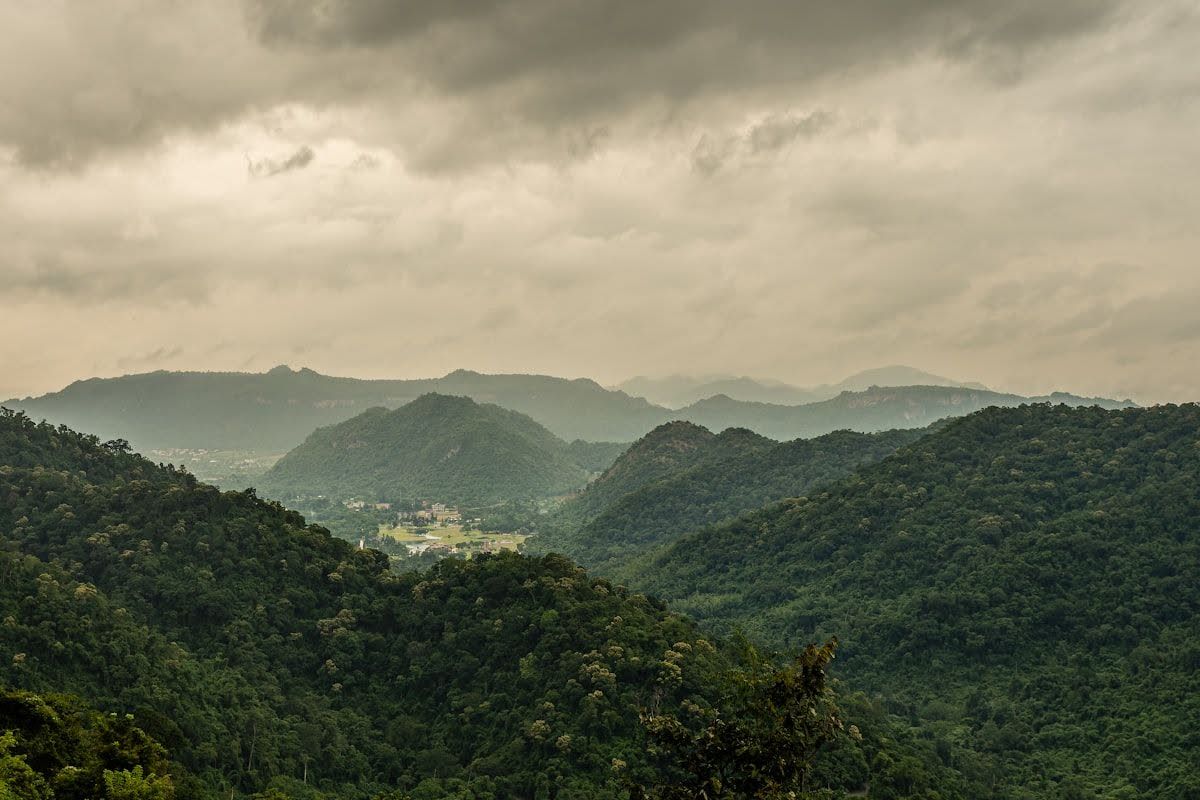
Rainy season transforms the landscape. The jungle becomes impossibly lush, everything is vibrant green, and flowers bloom across the island. If you’re into photography or just appreciate natural beauty, rainy season Koh Phangan is stunning.
Waterfalls at Full Flow
This is a big one. Koh Phangan’s waterfalls — Than Sadet, Phaeng, and others — are at their most impressive during and just after the rainy months. During dry season, some waterfalls slow to a trickle. During rainy season, they’re thundering. If waterfalls are on your list, check out our top things to do on Koh Phangan for the best ones to visit.
More Authentic Experience
With fewer tourists around, you get a more genuine sense of island life. Locals are less rushed, the vibe is more relaxed, and the travelers who are here tend to be more independent and interesting — they chose to come during the off-season for a reason.
The Cons: What’s Genuinely Inconvenient
Rougher Seas
The Gulf of Thailand gets choppier during rainy season, especially in November. This means:
- Some boat trips and snorkeling tours may be cancelled on rough days
- The ferry crossing from Koh Samui or Surat Thani can be bumpier (but services almost never stop entirely)
- Swimming can be more challenging at some beaches with stronger currents
If you were planning an Ang Thong National Marine Park day trip, check conditions before booking. The park sometimes closes during the roughest weather.
Muddy Roads
Some of Koh Phangan’s more remote roads become muddy and slippery after heavy rain. If you’re riding a motorbike, stick to paved roads until you’re confident in the conditions. The main roads between Haad Rin, Thong Sala, and the major beaches are paved and generally fine.
Occasional Multi-Day Storms
As mentioned, November in particular can bring storms that last 2–3 days. These are relatively rare, but if your trip is short, a multi-day storm can eat into your beach time. The longer your stay, the less this matters.
Some Beach Bars Close
A few seasonal businesses close during the quietest weeks of rainy season, particularly in November. The main areas (Haad Rin, Thong Sala) stay open year-round, but some of the more remote beach bars take a break.
Best Time to Visit Koh Phangan Overall
Here’s our honest ranking of the best months to visit:
Peak season (December–March): The driest weather, the most events, the biggest crowds, and the highest prices. Great weather is nearly guaranteed, but you’ll share the island with everyone else.
Sweet spot months (April–May and July–September): These are our personal favorites. The weather is mostly dry with occasional showers, prices are lower than peak season, and the island has a perfect balance of activity and space. September in particular is a hidden gem — dry weather, low prices, and manageable crowds.
Full rainy season (October–November): The cheapest time, the quietest beaches, and the lushest scenery — but with the most rain risk. Best for flexible travelers who can roll with the weather.
Any month: The Full Moon Party happens every month, rain or shine. So does the Half Moon Party and Black Moon Culture. The island’s event calendar doesn’t stop for weather.
Things to Do in Rainy Season
Rainy season doesn’t mean sitting in your room. Here’s what works well:
- Visit waterfalls — they’re at their best during the wet months
- Yoga and wellness — indoor yoga classes, meditation, and spa treatments are perfect for rainy afternoons
- Thai cooking classes — several places on the island offer cooking workshops
- Muay Thai training — covered gyms operate rain or shine
- Temple visits — Koh Phangan has several beautiful temples that are quiet and atmospheric in the rain
- Explore Thong Sala night market — covered stalls mean food browsing regardless of weather
- Read and relax — sometimes the best thing to do on a tropical island is nothing at all
- Socialize at the hostel — rainy afternoons at Eclipse’s bar tend to produce some of the best conversations and unexpected friendships
Koh Phangan Weather vs. Other Thai Islands
If you’re choosing between Thai islands and weather is a factor:
- Koh Phangan is on the Gulf side, so its heavy rain is concentrated in just 2–3 months — one of the shortest rainy seasons of any Thai island
- Koh Samui has a similar pattern but tends to get slightly more rain
- Koh Tao is similar to Koh Phangan — sheltered position means less monsoon impact
- Phuket/Krabi (Andaman coast) have a much longer rainy season from May to October
For a detailed comparison of the islands, check our Koh Phangan vs Koh Samui vs Koh Tao guide.
What to Pack for Rainy Season
A few additions to your regular packing list:
- Dry bag — essential for keeping your phone and wallet dry during unexpected downpours
- Light rain jacket — a packable waterproof layer beats an umbrella on a motorbike
- Quick-dry clothes — cotton takes forever to dry in tropical humidity
- Waterproof sandals — flip-flops with grip, or sport sandals
- Waterproof phone case — cheap insurance against the most expensive item most travelers carry
Eclipse’s Rainy Season Rates
We’ll be straightforward: staying at Eclipse during rainy season is cheaper. We lower our rates during the quieter months because we’d rather have happy guests at a fair price than empty beds. You get the same rooms, the same bar, the same location 100 meters from the beach — just at a better price.
Book your stay at Eclipse during the off-season and spend what you save on extra days, activities, and nights out. For more on keeping costs down, read our complete budget guide to Koh Phangan.
Rainy season on Koh Phangan isn’t something to avoid — it’s something to understand. And once you understand it, you might just prefer it.
You might also like
Christmas & New Year on Koh Phangan: The Complete Guide
New Year's Eve on Haad Rin Beach is the biggest night of the year — here's everything you need to know about spending the holidays on Koh Phangan.
The Digital Nomad's Guide to Koh Phangan (2026)
Everything remote workers need to know about living and working from Koh Phangan — coworking spaces, internet speeds, costs, visas, and community.
Your Guide to the Full Moon Party
Everything you need to know about Koh Phangan's legendary Full Moon Party — from what to wear to where to dance.